Wednesday, December 9, 2015
Coin Sex Lab
As weird as it sounds, we completed a coin sex lab this past week in biology. We modeled how genes and alleles randomly mix by using coins. The coins were flipped and whichever side they landed on determined what alleles were used. The coins being flipped represented the process of meiosis and writing the results down represented the process of reproduction. We expected to have one of each monohybrid or dihybrid cross because that was the most logical, but instead we usually got the genotype and phenotype of the most probable result. During meiosis, chromosomes can recombine, which is when chromosomes may exchange information. Homozygous alleles are alleles that are both either dominant or recessive, whereas heterozygous alleles are a pair of one dominant allele and one recessive. Probability and prediction are what helped us ´predict´ our results, though not all of them were right. We learned that autosomal inheritance is related to all of the chromosomes, whereas x-linked inheritance is only linked to the sex chromosome X which is why x-linked inheritances are mostly common in males. They only need one recessive allele to have the inheritance whereas females need two.

Unit 5 Reflection
Unit five included discussions on the topics of DNA, RNA, and protein synthesis. We learned how DNA is structured and that it is anti-parallel. DNA stands for deoxyribonucleic acid, and is structured as a double helix. It also coils around proteins called histones. RNA is a temporary copy of DNA that is used to build proteins from amino acids. RNA copies one side of the DNA and leaves the nucleus to go to a ribosome, which then translates the code into flesh and blood. We learned all of this new information through vodcasts and labs, such as the protein synthesis lab and DNA extraction lab.
I would say that say that my strength in this unit is understanding the genetic code and how it works because I do not have much trouble transcripting and translating DNA. However, my weakness would be protein synthesis, which a very complicated algorithm and uses complicated processes. I was very successful in this unit´s labs but my setbacks was the vodcast homework.
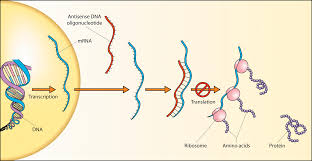

I would say that say that my strength in this unit is understanding the genetic code and how it works because I do not have much trouble transcripting and translating DNA. However, my weakness would be protein synthesis, which a very complicated algorithm and uses complicated processes. I was very successful in this unit´s labs but my setbacks was the vodcast homework.
Friday, December 4, 2015
DNA Extraction Lab Conclusion
In this lab we asked the question, how can DNA be separated from cheek cells in order to study it. We have found that following quite simple steps, DNA can be easily chemically separated from cheek cells. As seen in the picture included in this post, the yellow bubbly blob in the middle is my DNA. It is yellow from the gatorade used in the procedure. Our procedure to separate DNA from cheek cells worked and this supports our claim, which is if DNA can be separated from cheek cells, then DNA will be visible at the last step, because after our simple procedure, the DNA was visible in the alcohol which we put it in.
While our hypothesis was supported by our data, there could have been possible errors due to the fact that we had to construct the procedure ourselves. One little error could have messed up the experiment and given false results. In future experiments, I suggest you have a solid procedure for DNA extraction that has been verified by a professional.
This lab was done to demonstrate how DNA can be easily separated and studied. From this lab I learned that even if some procedures may seem hard, they are quite easy, and that DNA is stringy and tiny, which helps me understand how it fits into cells. Based on my experience from this lab, I can now separate DNA from cells and study the traits and genes of a person.

While our hypothesis was supported by our data, there could have been possible errors due to the fact that we had to construct the procedure ourselves. One little error could have messed up the experiment and given false results. In future experiments, I suggest you have a solid procedure for DNA extraction that has been verified by a professional.
This lab was done to demonstrate how DNA can be easily separated and studied. From this lab I learned that even if some procedures may seem hard, they are quite easy, and that DNA is stringy and tiny, which helps me understand how it fits into cells. Based on my experience from this lab, I can now separate DNA from cells and study the traits and genes of a person.

Wednesday, November 18, 2015
Infographic
This is my genetics infographic. If the photo is too small to view, here's a link to a larger size. https://magic.piktochart.com/output/8947259-genetics

Monday, October 19, 2015
My Photolab Data and Conclusion
Question: How does the color of light affect photosynthesis in increased CO2?
Hypothesis: If color affects the photosynthesis process of plants, then photosynthesis will differ under different colored lights.
Controls: power (50), time (20 secs), temp (25), increased CO2
Independent Variable: color of light
Dependent variable: number of O2 bubbles
TRIAL 1
|
TRIAL 2
|
TRIAL 3
| ||
Color of Light
|
# of O2 bubbles
|
# of O2 bubbles
|
# of O2 bubbles
|
AVERAGE
|
white
|
22
|
23
|
22
|
22.3
|
orange
|
18
|
17
|
18
|
17.6
|
green
|
7
|
7
|
7
|
7
|
blue
|
21
|
20
|
20
|
20.3
|
Conclusion
In this lab, I questioned whether the color of light would affect photosynthesis in a plant that is placed in increased carbon dioxide. I found that photosynthesis occurs best under white light, which had an average of 22.3 oxygen bubbles per 20 seconds, and barely occurs under green light, which had an average of 7 oxygen bubbles per 20 seconds. This data supports our claim because photosynthesis did differ under different colored lights.
This lab was done to demonstrate the effect of light on plants. From this lab, I have learned that white light helps photosynthesis best, which helps me understand how plants grow and what they use. Based on my experiences from this lab, I can now grow better plants and flowers and if I ever own a greenhouse, I can grow strong, large plants.
Wednesday, October 7, 2015
Egg Diffusion Lab
We began the egg diffusion lab by placing two eggs in cups that were filled with white vinegar. After a couple days the egg shell had dissolved in the vinegar. We washed the eggs until the membrane was almost clear and then placed on in a cup filled with corn syrup, and the other in water. We let them sit for a couple of days. After this, we checked the eggs and the one in sugar water had shrunk by almost a half of its original size, and the one in water stayed the same. The egg in sugar water shrunk because the molecules inside it diffused from high concentration to low concentration. It used passive diffusion in the process. The molecules in the egg in water wanted to also leave the egg but they were too large to pass through the semi-permeable membrane, and so they were stuck. They gained water, and some gained so much that their membrane gave out and the egg exploded.
| Class Data: Control (DI water) | table 8 | table 2 | table 3 | table 4 | table 5 | table 6 | table 7 | average |
| % change in mass | N/A | N/A | -0.74% | 0.37% | 0.45% | N/A | 6.95% | 1.80% |
| % change in circumference | N/A | N/A | 1.20% | 1.70% | 0% | N/A | 14.37% | 4.30% |
| Class Data: Sugar Water | table 8 | table 2 | table 3 | table 4 | table 5 | table 6 | table 7 | average |
| % change in mass | -46.70% | -44.90% | -52% | -49.70% | -41.71% | -39.58% | -47.70% | -42.25% |
| %change in circumference | -22.40% | -18.78% | -26.30% | -26.60% | -32.35% | -21.21% | -13% | -22.94% |
Wednesday, September 30, 2015
Inquiry Hour 1.2 - Generating Questions
I am interested in a question. This question asks why do we dream? It amazes me how we spend one third of our lives sleeping yet we still don't know what exactly happens in our sleep. There are many theories as to why we sleep, but none of them sound logical to me.
I have my own twenty questions about the world that I would like to find out. Here they are:
I have my own twenty questions about the world that I would like to find out. Here they are:
- Why is the universe expanding?
- Can we bring back extinct animals?
- What is dark matter made of?
- What is dark energy made of?
- What is at the very bottom of the ocean?
- Is there even a bottom to the ocean?
- What is at the very core of the Earth?
- Is artificial intelligence possible?
- Are there other universes?
- Are there beings on Earth that we cannot see?
- Why is there time?
- Is the Philosopher's Stone real?
- Is infinity real?
- Is heaven real?
- Is hell real?
- Did evolution really occur?
- Is there such a thing as karma?
- What happens after death?
- What is under the sea?
- Are we the only inhabitants in the universe?
Egg Cell Macromolecules Lab Conclusion
In the egg cell lab, we dissected an egg and separated it into three different parts: the yolk, the egg white, and the membrane. Previously, we had dissolved the shell in white vinegar. In this lab we questioned whether macromolecules can be identified in an egg cell. We used indicators to do this. I worked on identifying monosaccharides in the membrane, yolk, and egg white. I used the indicator called benedicts solution to do this, and found that monosaccharides were mostly present in the egg yolk and there were some in the membrane. Some errors in my lab could have been that I may have poured in different amounts of benedicts solution, and I could have let them heat for different times. In future experiments, I suggest having a partner to help you and mixing the benedicts solution with the egg very well.
We did this lab to test whether we could identify macromolecules in cells or not, and we were able to. From this lab, I have learned that the egg is actually a huge cell, and I have learned more about what a cell contains. I can now use this to teach future generations and study the cell in more depth.

We did this lab to test whether we could identify macromolecules in cells or not, and we were able to. From this lab, I have learned that the egg is actually a huge cell, and I have learned more about what a cell contains. I can now use this to teach future generations and study the cell in more depth.
Monday, September 28, 2015
Inquiry Hour 1.1 - Identifying Questions and Hypotheses
According to Australian scientists, continued harvesting of predatory fish may affect the environment in more ways than one would expect. The excessive culling and over-fishing may affect the natural food chain, and this can alter the blue carbon ecosystems. Changing the food chain means changing the amount of carbon captured in the seabed. "Predators play an important and potentially irreplaceable role in carbon cycling. The effect of the disproportionate loss of species high in the food chain cannot be underestimated." (Professor Connolly, http://www.sciencedaily.com/releases/2015/09/150928123318.htm)
Monday, September 21, 2015
Unit 2 Reflection
We recently finished the second unit in our biology class. This unit was about macro molecules along with their structure and function. The four macro molecules we learned about are called carbohydrates, lipids, nucleic acids, and proteins. All of them have important functions in the human body, such as being a source of energy. In the beginning of the unit, I had trouble understanding the structure of lipids and nucleic acids, but overcame this struggle by reviewing my notes and watching all the vodcasts. I have also learned that I work quite well in a group and I have learned that watching the vodcasts and taking notes really do matter. Before I thought they were just so the teacher could give us homework. I have learned a lot more about carbohydrates and proteins in unit 2. In middle school, I don't think we ever even talked about them too much. I definitely believe that I am a better student today than I was before unit 2 because now i understand the importance of macro molecules and i understand the importance of everything and every lab we do as a group in class. I would love to learn more about carbohydrates since they really seem to interest me. I'm curious about how the more saccharides there are, the blander it tastes, yet the less saccharide, the sweeter. It is usually the other way around in this world. I wonder about how people came to know all this information about our bodies and how they discovered it.
We also learned about atoms, compounds, and molecules, and how atoms make up everything in the universe. They are the quite literally the building blocks of life. We also covered elements, which are a pure substance, meaning they only contain one type of atom. Every atom contains protons, which are positively charged, neutrons, which are neutrally charged, and electrons, which are negatively charged. I did not have too much trouble with understanding these subjects because we covered the topic quite well in eighth grade with Mrs. Inlow, my former teacher.
We learned a bit about acids and bases along with the pH scale. Acids, which can be corrosive to metals and other materials, taste sour and can be very dangerous to the touch. Bases, which feel quite slippery, taste bitter and are attracted to acids. On the pH scale, the less the number, the more acidic the substance is, but the larger the number, the more basic it is. The number 7 is the neutral on the pH scale.

Friday, September 18, 2015
Cheese Lab Conclusion
In this lab, we questioned what are the optimal conditions and curdling agents for making cheese and our hypothesis was that the optimal conditions for curdling would be warm and acidic. We have found that the optimal conditions for curdling agents are an acidic and hot environment. We came to this conclusion through the fact that in the hot environment and acidic environment, the milk began to curdle within five minutes. We also observed that in the cold environment, curdling did not occur at all. This data supports our hypothesis because the milk curdled quicker in the hot and acidic environments.
While our hypothesis was supported through our data, there could have been errors due to the fact that we checked the curdling process every five minutes, and so there could have been some timing issues. The milk could have curdled within two minutes but we do not know for sure. There could have also been inconsistencies in the amount of curdling agent that we added due to the fact that not everyone was experienced with the tools. This could have affected the results of the experiment. In future experiments, I recommend that the process is observed at all times and also timed, and that the measurements of all the agents are very accurate.
This lab was done to demonstrate the best of cheese-curdling enzymes and to demonstrate a chemical reaction. From this lab, I have learned that the optimal conditions for cheese making are a hot environment and an acidic environment, such as a calf’s stomach where rennin comes from. Based on my experiences from this lab, I can now explain the science behind cheese making and the curdling process.
Time to Curdle (minutes)
| ||||
Curdling Agent:
|
Chymosin
|
Rennin
|
Buttermilk
|
Milk (control)
|
Acid
|
5
|
5
|
5
| |
Base
|
20
| |||
pH control
|
15
|
10
| ||
Cold
| ||||
Hot
|
5
|
5
| ||
Temp Control
|
10
|
10
|

Subscribe to:
Comments (Atom)