Wednesday, December 9, 2015
Coin Sex Lab
As weird as it sounds, we completed a coin sex lab this past week in biology. We modeled how genes and alleles randomly mix by using coins. The coins were flipped and whichever side they landed on determined what alleles were used. The coins being flipped represented the process of meiosis and writing the results down represented the process of reproduction. We expected to have one of each monohybrid or dihybrid cross because that was the most logical, but instead we usually got the genotype and phenotype of the most probable result. During meiosis, chromosomes can recombine, which is when chromosomes may exchange information. Homozygous alleles are alleles that are both either dominant or recessive, whereas heterozygous alleles are a pair of one dominant allele and one recessive. Probability and prediction are what helped us ´predict´ our results, though not all of them were right. We learned that autosomal inheritance is related to all of the chromosomes, whereas x-linked inheritance is only linked to the sex chromosome X which is why x-linked inheritances are mostly common in males. They only need one recessive allele to have the inheritance whereas females need two.

Unit 5 Reflection
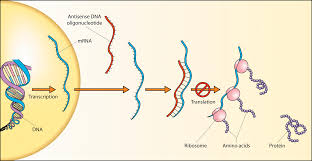
Unit five included discussions on the topics of DNA, RNA, and protein synthesis. We learned how DNA is structured and that it is anti-parallel. DNA stands for deoxyribonucleic acid, and is structured as a double helix. It also coils around proteins called histones. RNA is a temporary copy of DNA that is used to build proteins from amino acids. RNA copies one side of the DNA and leaves the nucleus to go to a ribosome, which then translates the code into flesh and blood. We learned all of this new information through vodcasts and labs, such as the protein synthesis lab and DNA extraction lab.
I would say that say that my strength in this unit is understanding the genetic code and how it works because I do not have much trouble transcripting and translating DNA. However, my weakness would be protein synthesis, which a very complicated algorithm and uses complicated processes. I was very successful in this unit´s labs but my setbacks was the vodcast homework.

I would say that say that my strength in this unit is understanding the genetic code and how it works because I do not have much trouble transcripting and translating DNA. However, my weakness would be protein synthesis, which a very complicated algorithm and uses complicated processes. I was very successful in this unit´s labs but my setbacks was the vodcast homework.
Friday, December 4, 2015
DNA Extraction Lab Conclusion
In this lab we asked the question, how can DNA be separated from cheek cells in order to study it. We have found that following quite simple steps, DNA can be easily chemically separated from cheek cells. As seen in the picture included in this post, the yellow bubbly blob in the middle is my DNA. It is yellow from the gatorade used in the procedure. Our procedure to separate DNA from cheek cells worked and this supports our claim, which is if DNA can be separated from cheek cells, then DNA will be visible at the last step, because after our simple procedure, the DNA was visible in the alcohol which we put it in.
While our hypothesis was supported by our data, there could have been possible errors due to the fact that we had to construct the procedure ourselves. One little error could have messed up the experiment and given false results. In future experiments, I suggest you have a solid procedure for DNA extraction that has been verified by a professional.
This lab was done to demonstrate how DNA can be easily separated and studied. From this lab I learned that even if some procedures may seem hard, they are quite easy, and that DNA is stringy and tiny, which helps me understand how it fits into cells. Based on my experience from this lab, I can now separate DNA from cells and study the traits and genes of a person.

While our hypothesis was supported by our data, there could have been possible errors due to the fact that we had to construct the procedure ourselves. One little error could have messed up the experiment and given false results. In future experiments, I suggest you have a solid procedure for DNA extraction that has been verified by a professional.
This lab was done to demonstrate how DNA can be easily separated and studied. From this lab I learned that even if some procedures may seem hard, they are quite easy, and that DNA is stringy and tiny, which helps me understand how it fits into cells. Based on my experience from this lab, I can now separate DNA from cells and study the traits and genes of a person.

Subscribe to:
Comments (Atom)